More Men Are on the Pill Than Ever. Here's What That Usage Spike Actually Means.
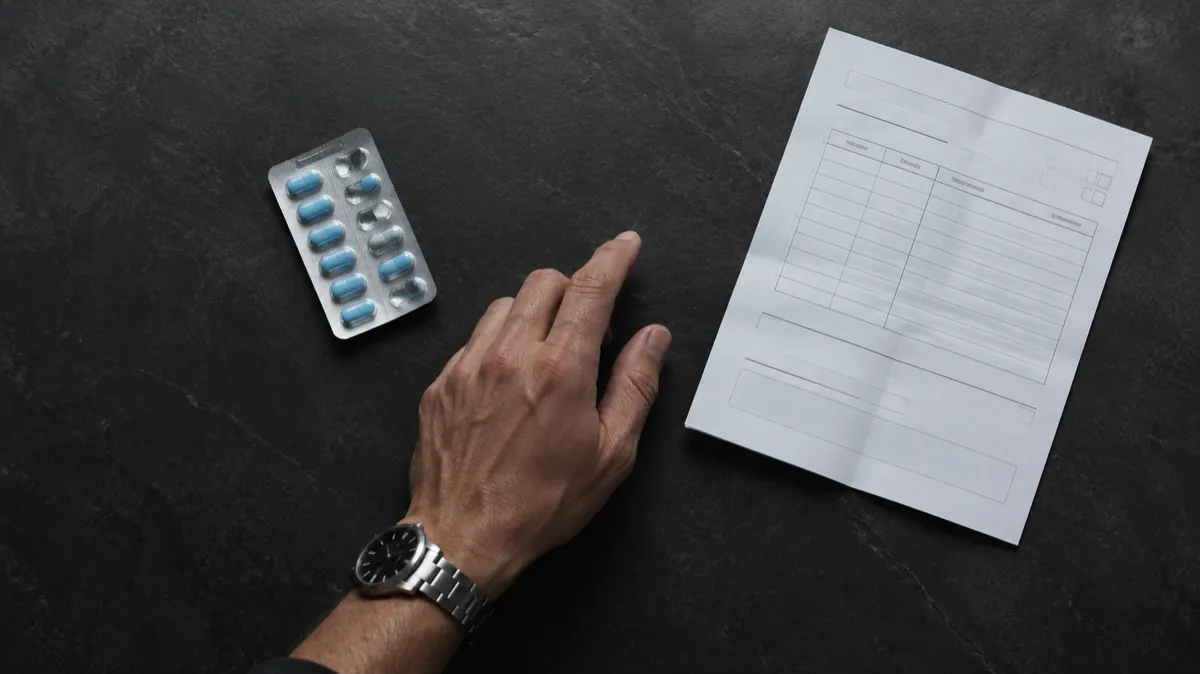
The little blue pill used to be a punchline. Now it's a subscription.
Generic sildenafil and tadalafil are cheaper than they have ever been. Telehealth platforms ship a 90-day supply after a short online questionnaire, often without a single lab value attached. Market analysts project the tadalafil market alone to grow more than 12 percent in one year, from roughly $5.5 billion in 2025 to $6.2 billion in 2026. Researchers have also tracked a steady rise in recreational use among younger men, and published reviews estimate that anywhere from about a fifth to more than three quarters of men using these drugs, depending on the population studied, obtain them without a prescription.
Most of the coverage around this frames it as an access story. Stigma is down, prices are down, more men are getting access. Some of that is real and worth acknowledging. But a usage curve is also a data set. When millions of men reach for the same medication, it tells us something about the bodies taking it. And what it tells us is not that men's health is getting better.
This piece explains what these drugs actually do, what they don't do, and why a good response to the pill can hide the exact information a man most needs.
Why Usage Is Climbing
Three forces are driving the curve.
The first is price. Since the patents on sildenafil and tadalafil expired, generic versions have dropped the cost per dose to a level most men no longer think about.
The second is distribution. Direct-to-consumer telehealth turned a doctor's visit into a checkout flow. The convenience is real. So is what gets skipped: a physical exam, bloodwork, and any follow-up on why the drug was needed in the first place.
The third is culture. Men talk about this more openly than they did twenty years ago, and that is a good thing. But openness about taking the pill has moved faster than curiosity about why.
None of these forces says anything about whether the men taking the pill are healthier. They only explain why the pill is easier to get.
How Sildenafil and Tadalafil Work
To understand what rising usage means, you have to understand the mechanism.
When arousal begins, nerves and the lining of the blood vessels release nitric oxide. Nitric oxide triggers production of a molecule called cGMP, which relaxes the smooth muscle in the penile arteries and lets blood flow into the erectile chambers. An enzyme called PDE5 breaks cGMP down, which ends the response.
Sildenafil and tadalafil block PDE5. With the enzyme blocked, cGMP lasts longer, the vessels stay relaxed longer, and more blood flows in. Sildenafil works for a few hours. Tadalafil works for up to about a day and a half.
That is the entire mechanism. The pill amplifies a signal the body is already sending. It does not create the signal, and it does not repair the system that sends it. It doesn't restore the endothelium. It doesn't raise testosterone. It doesn't rebuild tissue. When it wears off, everything underneath is exactly where it was.
This is why a pill that works is not the same as a body that works.
The Smallest Arteries Report First
The arteries that feed the penis are small, roughly one to two millimeters in diameter. The coronary arteries that feed the heart are about three to four. This difference is the basis of what researchers call the artery size hypothesis.
Vascular disease is a whole-body process. When the endothelium loses function from elevated blood sugar, unfavorable cholesterol, high blood pressure, smoking, or simple time, every artery is affected. But a narrowing that barely registers in a large coronary artery can meaningfully restrict flow in a vessel half its size. The smallest arteries report first.
The research supports this. In a widely cited study of men with coronary artery disease, about two thirds had noticed changes in erection quality before any chest pain, on average roughly three years earlier. In the placebo arm of a large prostate cancer prevention trial published in JAMA in 2005, men who developed new erection problems went on to have a measurably higher rate of later cardiovascular events than men who did not.
Prescription data points the same direction. An analysis of general practice prescribing in England found that men under 65 with type 2 diabetes were prescribed these drugs at four times the rate of men without diabetes. That is what you would expect if the pill is being used to work around metabolic and vascular change.
Here is the problem. When the pill works, it can silence the very signal that should have sent a man to get his blood checked. The result looks fine. The vessels keep doing what they were doing. Three years of lead time can quietly become zero.
The Structural Layer: What the Tunica Albuginea Does
Blood flow is only half of how an erection works. The other half is holding that blood in place.
The erectile chambers are wrapped in the tunica albuginea, a dense, layered sheath of collagen. As the chambers fill, they press outward against this sheath, and the sheath compresses the small veins that would otherwise drain blood back out. Think of it as the seal on the system.
When the collagen architecture of the tunica weakens, as it does with age, metabolic change, and reduced blood flow over time, that seal becomes less effective. Blood drains out faster than it should. Clinicians call this venous leak.
A PDE5 inhibitor increases how much blood flows in. It does nothing to improve how well that blood is held. This explains a pattern many men recognize: the pill worked reliably at 38, less reliably at 44, and now needs a higher dose for a less consistent result. The tissue changed. The pill didn't.
Addressing the structural layer requires a different approach entirely. Radiofrequency energy, such as Apex by InMode, is designed to stimulate collagen remodeling and new blood vessel formation in the tissue itself. It works on the system rather than around it, with changes building over a series of sessions rather than a single dose.
We explained the tunica albuginea, venous leak, and how radiofrequency rebuilds collagen structure in detail in "The Structural Problem Pills Don't Address." If the pill has become less consistent for you, that piece is the natural next read.
The Hormonal Layer: What the Pill Never Checks
A Generational Shift in Testosterone
The hormonal picture isn't only an individual story. It's a population one.
The Massachusetts Male Aging Study followed randomly selected men aged 45 to 79 in the Boston area for more than fifteen years. A 2007 analysis in the Journal of Clinical Endocrinology and Metabolism found that testosterone in American men declined over calendar time, independent of age. Men aged 65 to 69 in 2003 averaged about 423 ng/dL of total testosterone, compared with 503 ng/dL for men the same age in 1988. In other words, a man at a given age had less testosterone than a man the same age a generation earlier.
The researchers found that rising obesity and falling smoking rates did not fully explain the drop. Later work has debated how much of the decline reflects changes in lab methods and waist size rather than biology alone, and that debate is worth being honest about. But the practical point holds either way: the average man in his 40s today cannot assume his baseline matches what was typical for his father, and the only way to know his own is to measure it.
Put that next to the usage curve and the overlap is hard to miss. A population drifting toward lower hormonal reserve and worse metabolic health is also a population reaching for more pills.
What the Panel Reads That the Pill Doesn't
Drive and erection quality depend on hormones, and the pill doesn't touch any of them.
Testosterone. Testosterone supports desire and helps maintain the nitric oxide pathway the pill relies on. Low testosterone can mean the pill has less of a signal to amplify.
SHBG. Sex hormone binding globulin attaches to testosterone and takes it out of active circulation. SHBG tends to rise with age, so a man's total testosterone can look acceptable while the free, usable portion is low. This is why total testosterone alone is an incomplete number.
Estradiol. Men need some estradiol. Too much or too little can flatten libido and affect erection quality even when testosterone looks fine. Visceral fat converts testosterone into estradiol, which links body composition directly to this marker.
LH and FSH. These are the signals from the brain that tell the body to produce testosterone. They help determine whether a low reading starts at the source or downstream.
Prolactin. Elevated prolactin suppresses testosterone and drive, and is easy to miss without a test.
TSH. An underactive thyroid produces a picture that overlaps heavily with low testosterone: low energy, low drive, weight gain, slower recovery. Without checking it, a man can end up addressing the wrong system.
A man can respond well to sildenafil while running low free testosterone, a rising A1C, and a lipid profile that is quietly building cardiovascular risk. He feels handled. He isn't informed.
What a Medication Response Does and Doesn't Tell You
It's worth being precise here.
A good response to sildenafil or tadalafil tells you the nitric oxide pathway is still functional enough to amplify, and that blood can still be pushed into the chambers. That's useful to know.
It does not tell you the state of your endothelium. It does not tell you whether your metabolic markers are drifting. It does not tell you whether your collagen structure is holding up, whether your free testosterone is where it should be, or whether your thyroid is part of the story. And a declining response over time is not just a dosing issue. It is new information about the system underneath.
What the Usage Spike Actually Means
Read through that lens, rising usage is not a health trend. It's a workaround trend. It reflects a population of men whose vascular, structural, and hormonal systems are shifting, and who are increasingly being handed a tool that hides the evidence rather than a process that reads it.
To be clear, the pill is not the villain. It is a legitimate, well-studied medication, and for many men it belongs in the plan. The concern is when it becomes the plan, when a prescription takes the place of a diagnosis.
What a Complete Picture Looks Like
The better question isn't "does the pill work for me?" It's "why do I need it?" Answering that takes data, read by a physician, as a system.
At Springhouse, that starts with the Springhouse Men's Panel: Testosterone Free and Total with SHBG, Estradiol (LCMS), FSH and LH, Prolactin, PSA Total, CBC, CMP, Lipid Panel, TSH, and Hemoglobin A1C. Together, those markers cover the hormonal production chain, the metabolic and vascular markers most tied to small-vessel health, thyroid function, and the safety baseline.
For a full marker-by-marker breakdown of what each of these measures and how they work together, read "What Your Blood Is Actually Telling You."
Then the results are read together, not one at a time. Sometimes the answer is hormonal, and a monitored testosterone protocol makes sense. Sometimes the answer is metabolic, and the most important number on the page is A1C. Sometimes the answer is structural, and the conversation turns to radiofrequency. Sometimes the pill stays in the plan, but as a decision made with the full picture instead of in place of one.
The men taking the pill aren't the problem. Mistaking the result for the answer is.
Start With the Full Picture
If the pill has become part of your routine, or it works less reliably than it used to, that's not something to manage around. It's information worth reading.
Springhouse begins with a consultation. The $100 consultation deposit is applied toward services. The Springhouse Men's Panel is $249, and the deposit reduces that to $149 additional at the time of your blood draw. From there, Dr. Lee-Agawa reviews the full panel with you and builds a plan around what the numbers actually show.
Springhouse Men's Wellness is a physician-founded practice led by Dr. Melissa Lee-Agawa, delivered in partnership with Grace & Glow MD. These articles are written by Taka Agawa, founder, with Dr. Lee-Agawa's clinical guidance throughout. Spring House, Pennsylvania. www.springhousemen.com